
Masayuki Tomizawa | Director
Share this article
During the 17th Conference of the Parties to the Convention on Biological Diversity (COP17) in October 2026, the ISSB published an exposure draft on nature-related disclosures, and the concept behind the TNFD is now being carried over into the ISSB framework. Japan has more TNFD adopters than any other country, yet the people dimension remains the weakest area of its disclosure.
What is the TNFD?
The Taskforce on Nature-related Financial Disclosures (TNFD) is an international initiative, launched in June 2021, that develops a framework for companies and financial institutions to assess and disclose nature-related risks and opportunities. Behind it lies the estimate that more than half of global GDP (about US$44 trillion) is moderately or highly dependent on nature and its services1. If ecosystem services such as pollination, water supply and flood mitigation are degraded, the effects reach not only agriculture and food but also manufacturing, real estate and the financial institutions that fund them.
The final recommendations, published in September 2023, set out 14 recommended disclosures under the same four pillars as the climate-related TCFD: Governance, Strategy, Risk and Impact Management, and Metrics and Targets (Figure 1)2. Underlying them is the idea of viewing the relationship between business and nature from two sides: dependencies on nature and impacts on nature. Beyond that, the TNFD’s distinctive features are clearest in the three disclosures added to the TCFD’s 11 (marked ★ in Figure 1). The first is people: the recommended disclosures include human rights policies and engagement with affected stakeholders such as Indigenous Peoples and local communities. The second is place. Greenhouse gases affect the climate in the same way wherever they are emitted, but the same volume of water withdrawal means something quite different in a water-rich area than in a water-stressed one. The TNFD therefore asks for disclosure of assets and activities in priority locations where ecosystems are highly important or degraded, and sets out the LEAP approach that has four steps (Locate the organisation’s interface with nature, Evaluate dependencies and impacts, Assess risks and opportunities, and Prepare to respond and report) as an assessment method, beginning with locating the interface with nature (Locate). The third is the value chain: companies are asked to disclose the processes they use to assess dependencies and impacts not only in their own operations but also upstream and downstream, including where their raw materials are sourced.
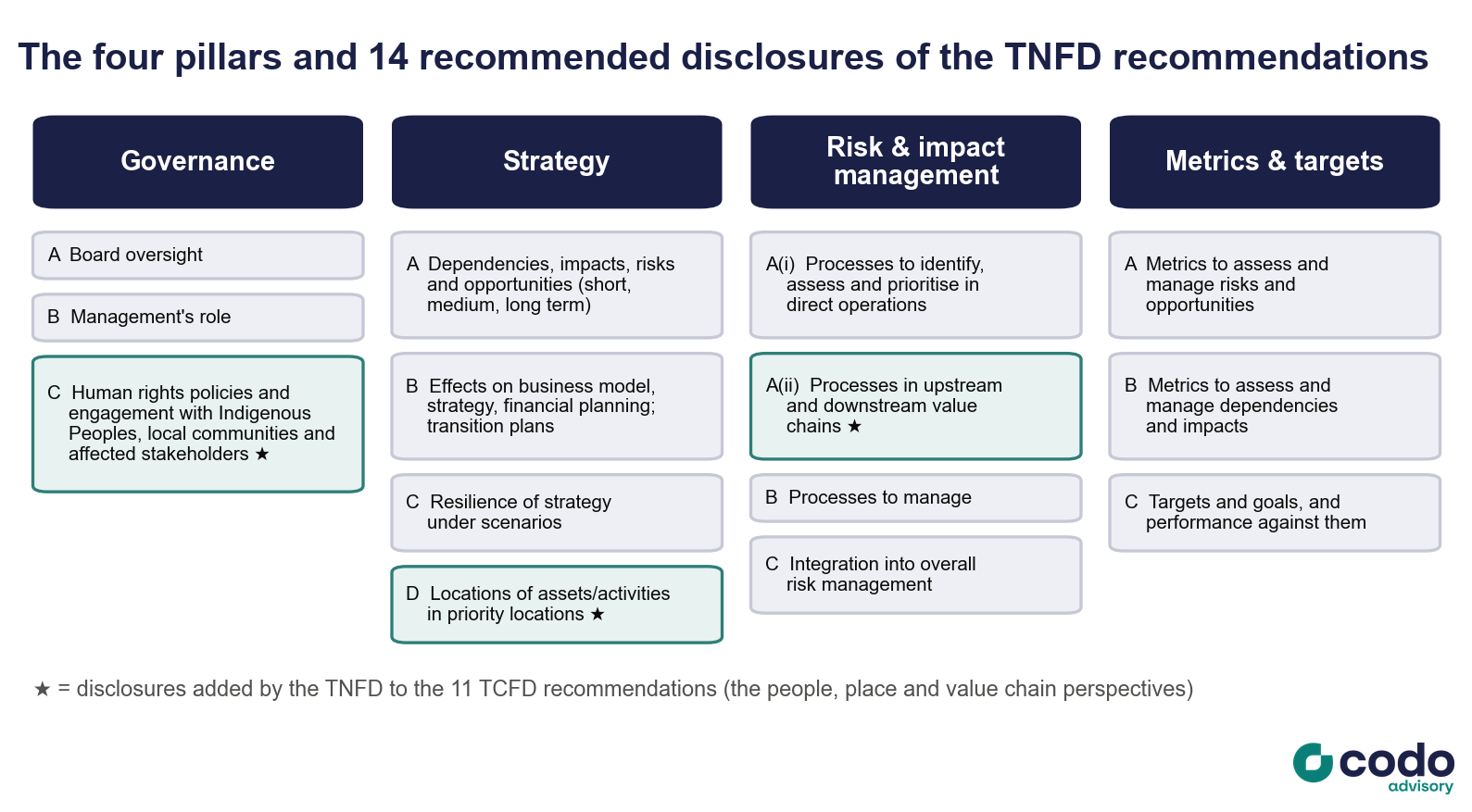
Figure 1: The four pillars and 14 recommended disclosures of the TNFD recommendations
How we got here
Japan: the most adopters in the world
The Kunming-Montreal Global Biodiversity Framework, adopted at COP15 in December 2022, called on countries to encourage large companies and financial institutions to assess and disclose their biodiversity impacts (Target 15), making corporate disclosure an international policy goal. With this tailwind, TNFD adopters, organisations that have committed to disclose in line with the TNFD, spread worldwide. The author’s count of the TNFD adopters list (as of 25 October 2026) shows that, of 836 organisations worldwide, Japan accounts for the most, with 254 organisations (30.4%), about 2.5 times the 103 of the United Kingdom in second place3.
However, adoption is skewed towards large companies. Matching against the list of Tokyo Stock Exchange (TSE) listed issues shows that half of the 30 largest companies by market capitalisation (TOPIX Core30) are adopters, while among small caps the rate is only 1–7% (Figure 2). By sector, adoption is high in sectors with large dependencies and impacts on nature, such as marine transport, insurance, pulp and paper, banking and foods. Financial institutions also account for around 50 organisations, about 20% of Japan’s adopters.
As data disclosure by large companies advances, adoption should also spread to small and mid-sized listed companies. Precisely because few others are doing it yet, establishing a position as an early adopter might look attractive to investors as well, and might even lead to a higher valuation in the stock market.
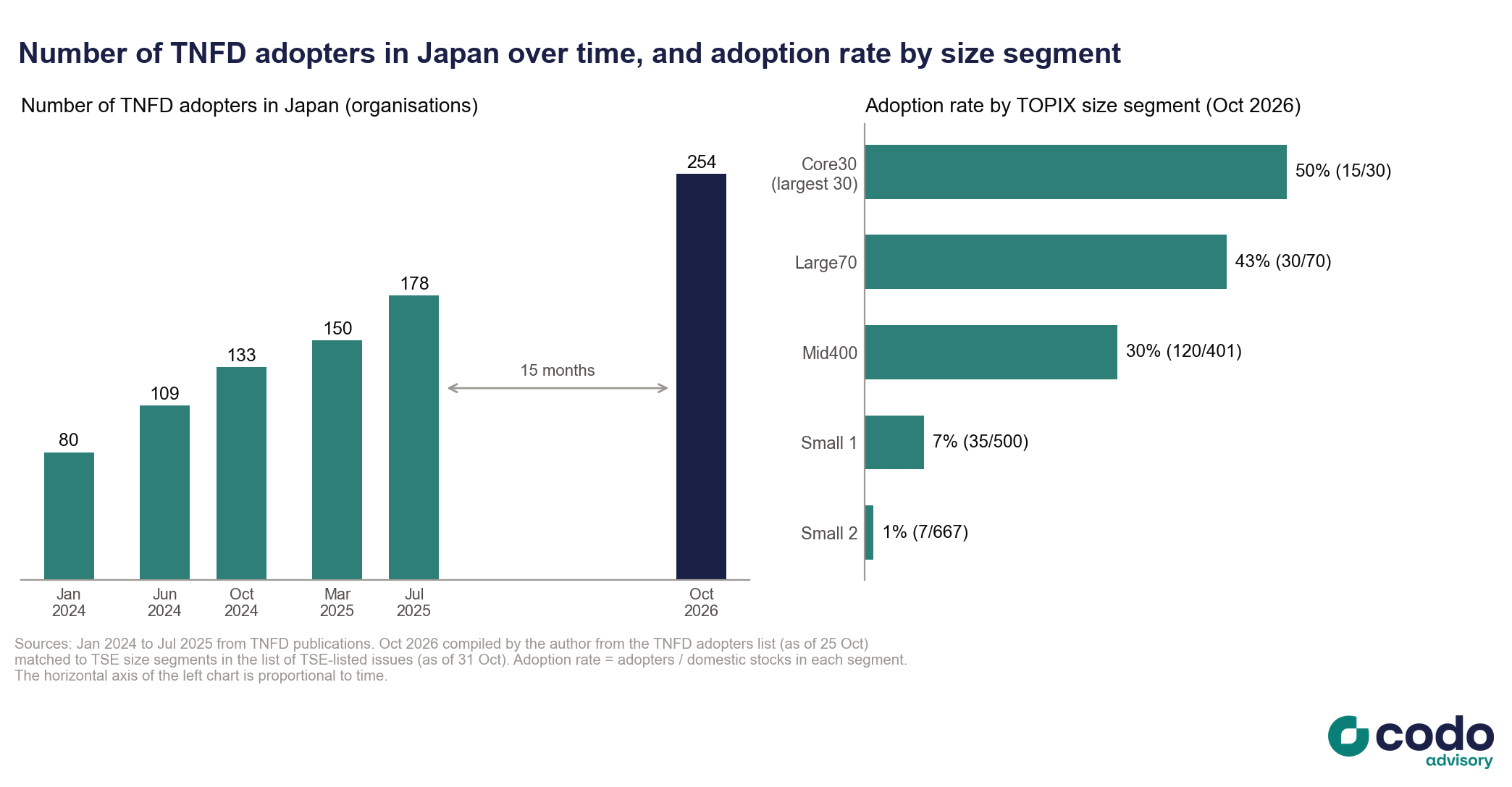
Figure 2: Number of TNFD adopters in Japan over time, and adoption rate by size segment
Government support has also been significant. In 2023 the Cabinet approved the National Biodiversity Strategy 2023–2030, and in March 2024 four ministries published the Nature Positive Economy Transition Strategy. In October 2024 the Ministry of the Environment announced that it would contribute the equivalent of about US$500,000 to the TNFD over two years and participate in joint research and in building infrastructure for nature-related data (the TNFD Data Facility)4. Japan is involved not only in adoption but in developing the framework itself.
EU: a de facto obligation
The EU Corporate Sustainability Reporting Directive (CSRD) does not mandate the TNFD itself. However, among the European Sustainability Reporting Standards (ESRS) under the CSRD, ESRS E4 on biodiversity is a mandatory disclosure for companies that judge it material. The correspondence mapping published by the TNFD and EFRAG (formerly the European Financial Reporting Advisory Group) in June 2024 found that all 14 TNFD recommended disclosures are reflected in the ESRS and that the LEAP approach can be used for the materiality assessment5. Because the ESRS are being simplified, the correspondence with the revised standards needs to be re-confirmed, but the EU has built essentially the same approach as the TNFD into its regulatory system.
The Omnibus I Directive of February 2026 narrowed the scope of the CSRD to companies with more than 1,000 employees and net turnover above €450 million6. Non-EU groups will be required to report from the 2028 financial year if their EU turnover exceeded €450 million in each of the last two consecutive years and they have an EU subsidiary or branch with turnover above €200 million7. For Japanese companies with large operations in Europe, work on the TNFD also lays the groundwork for ESRS E4.
Passing the baton to the ISSB
In 2025 the International Sustainability Standards Board (ISSB) decided to build on the TNFD’s work in considering nature-related disclosure requirements, and published an exposure draft to coincide with COP17. The TNFD has completed its technical work and will now support the ISSB in finalising the requirements.
Remaining challenges in TNFD disclosure
Adoption has grown rapidly, but there are still many challenges in the substance of disclosure. Daiwa Institute of Research, a Japanese think tank, examined 63 listed Japanese adopters (excluding financial institutions) that had published disclosures in line with the TNFD recommendations by the end of February 2025. Some 80% or more disclosed basic items such as board oversight, management’s role, and the identification and management of risks in direct operations. By contrast, items that require deeper analysis, such as scenario analysis, value-chain assessment and metrics, had lower disclosure rates (Figure 3)8. Japan’s adopters have since grown to 254 organisations, and all of the figures below come from surveys of early disclosers.
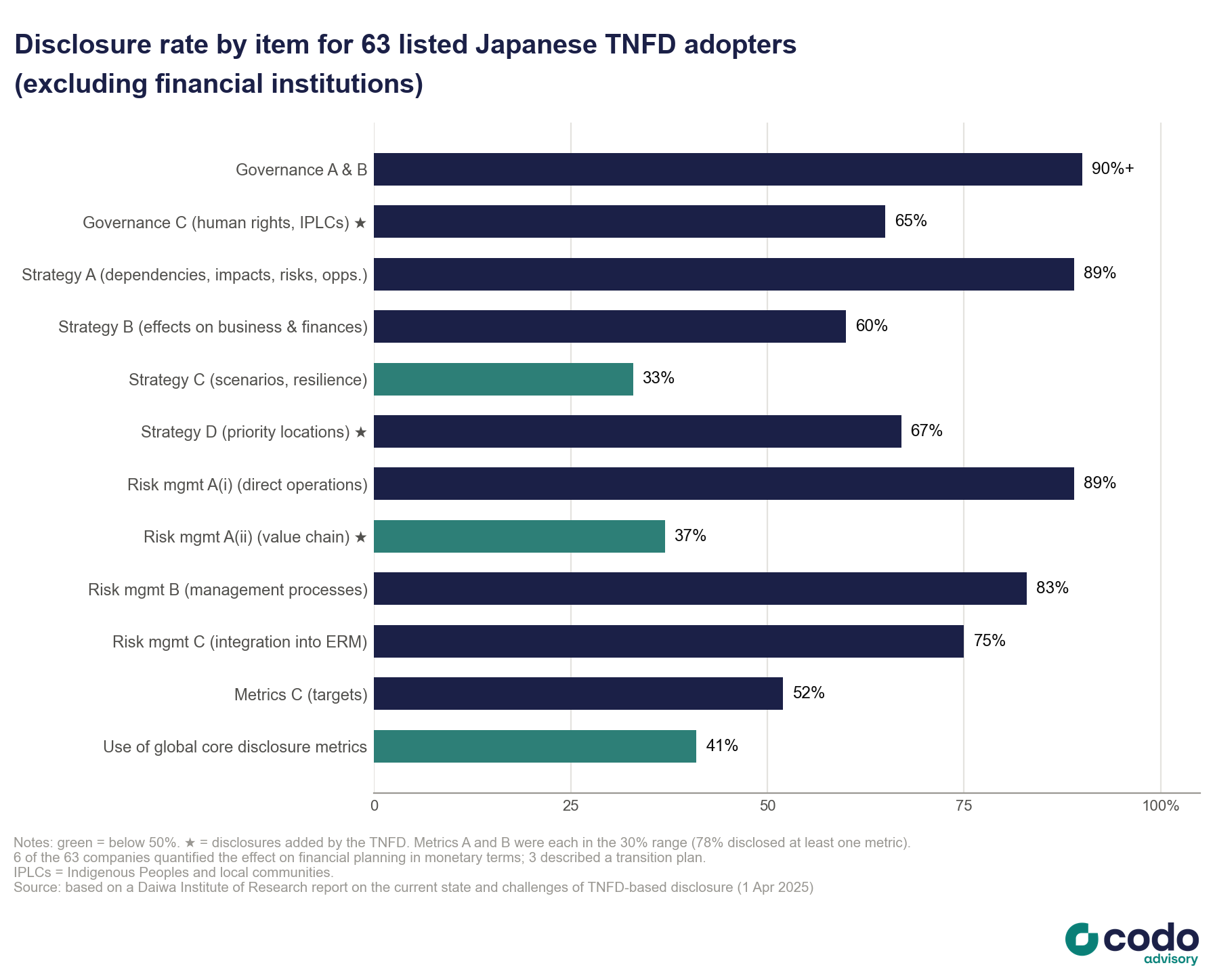
Figure 3: Disclosure rate by item for 63 listed Japanese TNFD adopters
① Data and location-based understanding Companies may know where their own sites are, but tracing raw-material suppliers and the production areas beyond them is difficult. Only 37% of companies disclosed their assessment process for the value chain. A WWF Japan report assessing 65 companies that had disclosed by the end of 2024 likewise found that only 12 (18%) had secured traceability for at least part of the value chain and gone as far as identifying priority locations and analysing dependencies and impacts, while 28 (43%) stopped at generic, sector-level analysis using tools9. Information barriers exist even at companies’ own factories. The Japanese cosmetics company KOSÉ, after a literature review of groundwater use at its main plant, disclosed that it had found no past surveys of impacts on spring-dependent organisms10. In practice, the further location-based analysis goes, the more it runs into the barrier of insufficient information.
② Moving beyond qualitative description There is no common yardstick like CO₂ emissions for climate, which makes quantification difficult. Only 33% of companies disclosed scenario analysis, just 6 of the 63 showed financial effects in monetary terms, and only 3 described a transition plan.
③ Building in the human dimension The disclosure rate for Indigenous Peoples and local communities was 65%, lower than for the other governance items (over 90%). In WWF Japan’s assessment, only 19 companies (29%) had grievance mechanisms covering local residents and Indigenous Peoples and local communities upstream in the value chain. One likely reason is that information held by environmental and human rights departments is not well connected. Yet nature-related problems always occur in specific places, and people live in those places. The first to feel the effects of water withdrawal, land conversion and pollution are local people who rely on nature for water, food and livelihoods, and land disputes and local opposition rebound on financial performance in the form of operational shutdowns and project delays. People are not an add-on to nature-related disclosure but its core.
④ Integration with climate disclosure, and resource constraints Mandatory disclosure under SSBJ standards (set by the Sustainability Standards Board of Japan) begins in phases from the fiscal year ending March 2027, starting with the largest Prime Market companies, and many companies have their hands full with climate. Yet in a survey conducted by the TNFD in 2025, 78% of responding organisations that had already published nature-related disclosures reported them in an integrated way with their climate-related reporting11. Just as deforestation is both a source of emissions and a loss of biodiversity, treating the two separately leads to duplicated work and inconsistencies.
Common to all four challenges is uncertainty about what, and how much, is enough to measure. And why, in the first place, do companies need to engage with nature to this extent? The assessment published by IPBES (the Intergovernmental Science-Policy Platform on Biodiversity and Ecosystem Services) in February 2026 offers both an answer to that question and clues for tackling the challenges.
The scientific basis set out by IPBES, and clues to the challenges
IPBES is an intergovernmental science body sometimes described as the IPCC of biodiversity. Its Business and Biodiversity Assessment, published in February 2026, stated that all businesses depend on biodiversity and all businesses have an impact on biodiversity, and made clear that all businesses, including financial institutions, have a responsibility to address those impacts and dependencies1213. This gives intergovernmental scientific backing to the TNFD’s approach of requiring disclosure from both sides, dependencies and impacts. The assessment further characterises biodiversity loss as a critical and pervasive systemic risk to the economy and financial stability.
The assessment also offers clues to challenges ① and ② in the previous section. Acknowledging that business-relevant data and knowledge tend to be fragmented and face issues of accessibility and transparency, it concludes that no single measurement approach suits every business decision, and that approaches must be chosen according to purpose. Rather than waiting for perfect data and metrics, companies can start at important sites with fit-for-purpose methods and improve accuracy step by step. This also aligns with the LEAP approach, which begins by locating the interface with nature.
Another key point is that the loss is driven by human economic activity, and that what drives that activity is finance. The assessment states that the growth of the global economy has come at the cost of immense biodiversity loss, and that businesses often bear little or no financial cost for their negative impacts on nature. In 2023, finance flows with direct negative impacts on nature reached US$7.3 trillion, of which US$4.9 trillion was private and about US$2.4 trillion was public spending, including environmentally harmful subsidies. By contrast, only about US$220 billion went to conservation and restoration. Finance that harms nature is about 33 times the finance that protects it (Figure 4). Where this money goes is decided by companies, financial institutions and governments: in other words, by human judgement.
And those who bear the consequences are also people. According to the assessment, industrial development threatens 60% of Indigenous lands around the world, and a quarter of all Indigenous territories are under high pressure from resource exploitation. Both those who cause the loss and those who pay its price are people, but in many cases they are not the same people. That is precisely why the human dimension discussed in challenge ③ should be placed at the centre of nature-related disclosure. The assessment states that businesses alone cannot bring about the scale of change needed to halt and reverse biodiversity loss, and that this requires an enabling environment, such as supportive policies and regulation. Disclosure is not the goal but a means of changing these financial flows. The COP17 discussions and the expectations of companies and financial institutions discussed in the following sections are all extensions of this point.
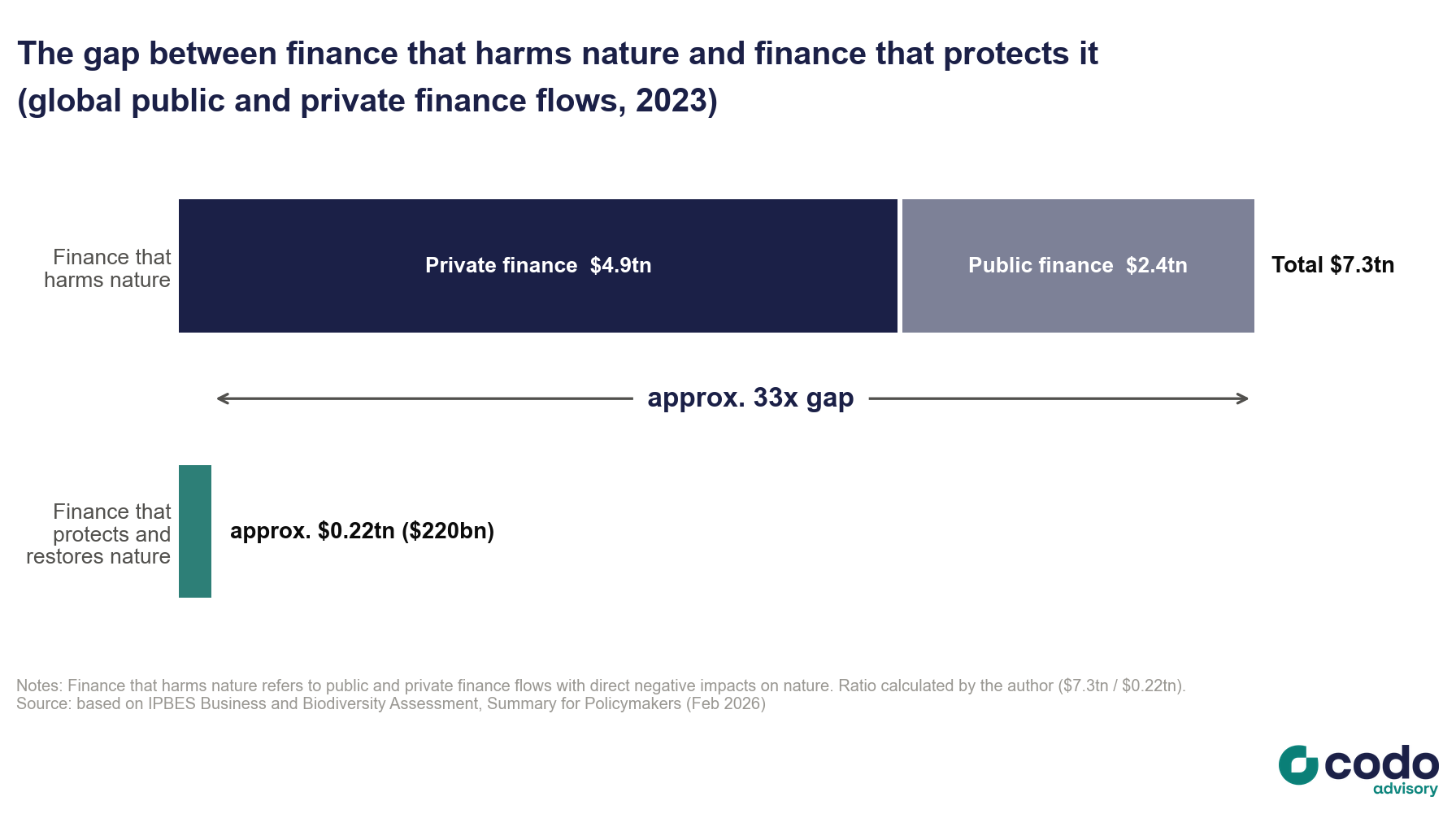
Figure 4: The gap between finance that harms nature and finance that protects it (global public and private finance flows, 2023)
What COP17 showed
COP17 reviewed progress towards the 2030 targets for the first time and expressed deep concern that the targets will not be met on the current trajectory. It then adopted the Yerevan Pathway, which prioritises measures such as reforming the harmful subsidies highlighted by IPBES, but many of the disputes over finance were deferred to COP18 in 202814. There was no new decision on corporate disclosure.
Meanwhile, the exposure draft published by the ISSB on 22 October, during the conference, calls for disclosure on matters such as consideration of locations across the entire value chain, engagement with local communities, scenario analysis, and the amount and percentage of assets vulnerable to nature-related risks15. Application of the practice statement (an exposure draft of a practice statement on nature-related disclosures) itself is voluntary. However, the ISSB takes the view that disclosure of material nature-related information is already required under IFRS S1, and the draft sets out concretely how to make that disclosure. The draft refers to the LEAP approach and TNFD metrics. As of November 2026, the SSBJ has not yet indicated how it will treat the draft in Japan. The comment deadline is 19 February 2027.
The perspective of non-financial companies
Whereas financial institutions see nature-related risk as risk in their investees and borrowers, for non-financial companies it is first and foremost a risk to their own business. As IPBES has shown, every business depends on biodiversity. If the water used in factories, the land and forests that produce raw materials, or the ecosystems that protect sites are degraded, the effects rebound on revenue and profit as operational shutdowns, rising procurement costs or supply disruptions, and project delays caused by local opposition. Moreover, much of this happens outside the company’s own premises, upstream in the value chain. The barriers of data and location seen in challenge ① are barriers to risk management before they are barriers to disclosure.
Some companies are beginning to overcome these barriers. WWF Japan commends Kao, a Japanese consumer goods and chemicals company, for identifying palm oil as a commodity with large dependencies and impacts on nature and for disclosing its progress on traceability to production areas, for example by mapping its list of palm oil mills. Kao has also set up a mechanism to receive grievances and inquiries directly from independent smallholders and others in Indonesia, and discloses the number received and how they were handled. It is an example of how tracing suppliers leads directly to understanding both places and people.
Nature-related action is not only defensive. The TNFD asks for disclosure of opportunities as well as risks, and improving resource efficiency, diversifying suppliers, and developing products and services with a lower burden on nature can all become sources of competitiveness. However, IPBES also points out that many businesses cannot currently generate revenue from their positive impacts on biodiversity. Turning opportunities into business value requires presenting a company’s efforts in a way that customers and investors understand, and disclosure is a means to that end.
Non-financial companies are also on the receiving end of questions from financial institutions and business partners. As the next section shows, the accuracy of financial institutions’ assessments depends on the disclosures of the companies they finance. Requests from business partners for information on suppliers and sites are also likely to increase. Whether a company can explain its own dependencies and impacts in its own words may come to affect the terms of its financing and business dealings. Many Japanese companies are already conducting human rights due diligence in their supply chains. The regions and people they have identified among their suppliers overlap with the places and people that the TNFD asks about. There is no need to start nature-related work from scratch: linking it to human rights work is the shortcut.
The financial perspective
Just as IPBES has framed the loss of nature as a risk to financial stability, nature-related risk is increasingly recognised as an issue for the financial system. Analysis by the European Central Bank (ECB) shows that about 75% of euro area bank lending to companies goes to firms highly dependent on ecosystem services16. The NGFS, a network of central banks and supervisors, also published a conceptual framework for nature-related financial risks in 202417.
Disclosure is even harder for financial institutions than for non-financial companies. Their assessments cover thousands to tens of thousands of investees and borrowers and their sites, and credit systems often lack location data on factories and suppliers. Unless investees’ disclosures improve, the accuracy of financial institutions’ disclosures will not improve either. A realistic, phased approach is to screen the whole portfolio at sector level first and then move to site-level analysis, starting with high-priority investees. Given that the ISSB exposure draft calls for the amount and percentage of vulnerable assets, preparing to show exposures in monetary terms is also essential.
At the same time, the roughly 33-fold gap identified by IPBES between US$7.3 trillion in negative finance and US$220 billion in positive finance is pressing financial institutions to change their role. In most markets, a gap like this would be closed by arbitrage. This one might persist because nature has no price. Disclosure that makes nature-related risks visible works much like a price signal, and if it creates incentives for investors and lenders, the gap could begin to narrow. The next task is to move beyond treating disclosure as a risk inventory and to turn it into action that changes financial flows, through engagement with investees and through supplying finance for conservation, restoration and transition.
What to do after COP17
As experience with climate disclosure shows, starting preparation only after standards are finalised leaves too little time to build data and organisational capacity. Companies and financial institutions should start on the following five actions now.
- Read the exposure draft and identify the issues for your organisation: If you have concerns about the burden or other matters, submit comments by the February 2027 deadline, directly or through industry associations. Companies with operations in the EU should also check the relationship with ESRS E4.
- Identify gaps against TNFD disclosure: Quantitative metrics, scenario analysis and location-specific target setting tend to require additional work. Companies that have not yet started can begin by identifying their important sectors and sites using the LEAP approach, with what IPBES calls fit-for-purpose methods.
- Build data starting from the sites with the largest impacts: Prioritise businesses with large revenue, procurement spend or lending and investment balances, and check overlaps with areas such as those under high water stress. Disclosing this process as a roadmap is also effective.
- Build an organisation that handles climate, nature and human rights together: Organisations that keep these in separate departments cannot meet the demand for integrated disclosure. The starting point is a shared, cross-departmental understanding of how nature and the business are connected.
- Position it as a management issue: Nature-related risks bear directly on procurement, operations, asset values and credit. With COP17, IPBES and the ISSB all aligned, now is a good time to explain to senior management why action is needed now.
Conclusion
The TNFD created a common language for describing nature in financial terms and spread around the world in just a few years. Its results are about to be carried forward in the ISSB’s draft practice statement, and in Europe they have already been built into regulation as ESRS E4. Since material information must be disclosed even under existing standards, the room for a wait-and-see approach to a voluntary framework is shrinking. As data disclosure on the upstream value chain, such as raw-material sourcing, advances and confidence in that data grows, these disclosures are likely to play a growing role in the stock market. Taking a step now will shape the quality of disclosure and management in the years ahead. Japan, which leads the world in adoption and whose government has supported the framework, has the capacity to take what it has built to the stage of quantification and integration. What must not be forgotten is that those who damage nature and those who pay the price are both people. Keeping in view the people behind the numbers in disclosures should be the next step for the TNFD.
How we can help
Not knowing where to start, or finding that the organisation does not share the same sense of urgency: we help with these first steps through the following two services.
Biodiversity Collage: A workshop in which participants use cards based on the scientific findings of IPBES to build, for themselves, the chain linking the causes of biodiversity loss to its effects on business and society. Running it across senior management and departments such as sustainability, procurement, human rights and investment and lending creates a shared understanding of why action is needed now and a foundation for thinking about climate, nature and human rights together. There is a risk of arriving at the wrong goal if understanding of biodiversity is vague or differs between departments.
Biodiversity consulting: We provide support tailored to each stage of your work, from identifying important sites and sectors with the LEAP approach, gap analysis between TNFD disclosure and the ISSB exposure draft and ESRS E4, and developing data roadmaps, to assessing suppliers and sites for non-financial companies and portfolio analysis for financial institutions.
References
- World Economic Forum (WEF), Nature Risk Rising: Why the Crisis Engulfing Nature Matters for Business and the Economy (January 2020) https://www.weforum.org/publications/nature-risk-rising-why-the-crisis-engulfing-nature-matters-for-business-and-the-economy/ ↩︎
- TNFD, Recommendations of the Taskforce on Nature-related Financial Disclosures (September 2023) https://tnfd.global/publication/recommendations-of-the-taskforce-on-nature-related-financial-disclosures/ ↩︎
- TNFD, TNFD Adopters list (Web Archive copy as of 25 October 2026, compiled by the author) https://web.archive.org/web/20261025123947/https://tnfd.global/engage/tnfd-adopters/tnfd-adopters-list/ ↩︎
- Ministry of the Environment, Japan, Contribution to the Taskforce on Nature-related Financial Disclosures (TNFD) (29 October 2024, in Japanese) https://www.env.go.jp/press/press_03929.html ↩︎
- EFRAG and TNFD, TNFD and EFRAG publish correspondence mapping (June 2024) https://efrag.org/News/Public-526/TNFD-and-EFRAG-publish-correspondence-mapping ↩︎
- Official Journal of the EU, Directive (EU) 2026/470 (Omnibus I Directive simplifying the CSRD and CSDDD, OJ L, 26 February 2026) https://eur-lex.europa.eu/eli/dir/2026/470/oj ↩︎
- Linklaters, EU CSRD after the Omnibus: what has actually changed and what has not (13 August 2026) https://sustainablefutures.linklaters.com/post/102nhpp/eu-csrd-after-the-omnibus-what-has-actually-changed-and-what-has-not ↩︎
- Daiwa Institute of Research, Current State and Challenges of Disclosure Based on the TNFD Recommendations (1 April 2025, in Japanese) https://www.dir.co.jp/report/research/capital-mkt/esg/20250401_025010.pdf ↩︎
- WWF Japan, TNFD Disclosure Trends in 2024 and the Response of Japanese Companies: Trend Analysis and Future Challenges Based on Benchmark Survey Results (August 2025, in Japanese) https://www.wwf.or.jp/activities/data/20250828-TNFD-report.pdf ↩︎
- KOSÉ Corporation (Japanese cosmetics company), KOSÉ TNFD Report (2 September 2024, in Japanese) https://koseholdings.co.jp/ja/sustainability/environment/biodiversity/pdf/tnfdreport.pdf ↩︎
- TNFD, TNFD 2025 Status Report (September 2025) https://tnfd.global/publication/tnfd-2025-status-report/ ↩︎
- IPBES, Media Release: IPBES Business and Biodiversity Assessment (9 February 2026) https://www.ipbes.net/bba-report/media-release ↩︎
- IPBES, Summary for Policymakers of the Methodological Assessment Report on the Impact and Dependence of Business on Biodiversity and Nature’s Contributions to People (February 2026) https://www.ipbes.net/business-impact ↩︎
- Carbon Brief, COP17: Key outcomes agreed at the UN biodiversity conference in Yerevan (31 October 2026) https://www.carbonbrief.org/cop17-key-outcomes-agreed-at-the-un-biodiversity-conference-in-yerevan ↩︎
- IFRS Foundation, Exposure Draft ISSB/ED/2026/1: Nature-related Disclosures (October 2026) https://www.ifrs.org/content/dam/ifrs/project/nature-related-disclosures/issb-ed-2026-1-ps-nature-related-disclosures.pdf ↩︎
- European Central Bank (ECB), Occasional Paper No. 333, The economy and banks need nature to survive (2023) https://www.ecb.europa.eu/pub/pdf/scpops/ecb.op333~1b97e436be.en.pdf ↩︎
- NGFS, NGFS publishes two complementary reports on nature-related risks (July 2024) https://www.ngfs.net/en/press-release/ngfs-publishes-two-complementary-reports-nature-related-risks ↩︎
*URLs checked as of November 2026
