
Lost in Disclosure: Thin Reports, Real Commitment
From fiscal years ending March 2027, Japan begins phasing in mandatory sustainability disclosure. We spoke with Ikumi Emori, Executive Officer and Head of the ESG Advisory Division at Edge International, who has spent nearly 18 years helping Japanese companies prepare their reports, about what is changing on the ground, and what overseas investors may be missing.
1. Two Reports, Two Purposes
Listed companies in Japan publish two kinds of reports. The Annual Securities Report (yuho) is the statutory filing, carrying legal liability. The integrated report is voluntary: companies use it to explain their strategy, their material issues and their long-term value creation, to investors and to their own employees.
Until now, most companies have treated sustainability as integrated-report material. That is changing. Under the standards of the SSBJ (Sustainability Standards Board of Japan), which are based on the ISSB standards, Prime Market companies must include sustainability information in the yuho. The obligation is phased in by market capitalisation, measured as the average of the past five fiscal year-ends. The amended Cabinet Office Order of February 2026 sets the first two stages; the next stage has been proposed but not yet written into the rules:
- ¥3 trillion or more: fiscal years ending March 2027
- ¥1 trillion to ¥3 trillion: fiscal years ending March 2028
- ¥500 billion to ¥1 trillion: fiscal years ending March 2029 (proposed)
- Below ¥500 billion: under consideration
Third-party assurance becomes required from the year after the obligation begins, with a limited scope for the first two years. (Sources: Financial Services Agency, Financial System Council working group report, January 2026; amended Cabinet Office Order, February 2026)
2. Rules and Robots
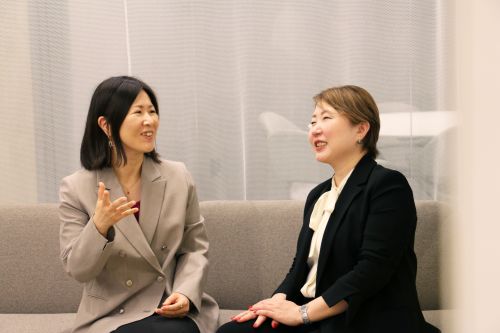
According to Emori, requests from large companies now centre on two topics. The first is the SSBJ obligation. The second is AI, which has appeared as a new reader of corporate reports. “When a company wants a stronger value-creation story, the request is clear,” she says. “With AI, companies don’t yet know what being ready would even mean. They first ask us for information and options.”
Among companies below ¥500 billion, which face no fixed deadline, requests are scattered. A growing number take the conversation back in-house. “They tell us they realised they first need to decide their own policy, and will come back after discussing it internally,” Emori says. With limited staff, they choose to think before they start. She calls this a healthy stance.
3. When the Purposes Overlap
Once sustainability information sits in the yuho, part of what the integrated report used to carry moves into the statutory filing. Each company now has to decide whether its integrated report still has a job to do.
Emori says only a small number of companies have clearly announced that they will fold their integrated report into the yuho. One reason she hears from them is that this is the global standard. In Europe, she notes, sustainability information increasingly sits inside the annual report, and companies that have decided to compete on international standards tend to move toward the format that is easiest for readers to use.
Companies that keep their integrated report, in Emori’s experience, have a different intention: they have something to say beyond the prescribed framework. Emori does not see either path as the right one. “But a company that has not put its own identity into words,” she says, “ends up having to compete on someone else’s field.”
For investors, this means the document worth reading may differ from one company to the next.
4. Serious, but Silent
Emori sees two kinds of companies that take sustainability seriously. In one, top management can explain it entirely in their own words. In the other, leaders know it matters but have not put it into words, so it does not reach the organisation. Employees conclude it can wait, and outsiders see only a pose.
Part of the cause is simply that executives rarely get the chance to speak. In one-hour interviews for integrated reports, executives talk about how the company began, what it has protected and the reasoning behind its strategy, most of which never makes it into the final text. “Staff who sit in on these interviews often tell me it is the first time they have heard an executive speak this deeply,” Emori says.
For investors, the lesson is direct: thin reports do not mean thin commitment.
5. Machine Readability: Where Japan Stands
In the EU and the US, machine-readable tagging of annual reports is already built into the rules. In Japan, the yuho is filed in a machine-readable format, but most integrated reports are designed PDFs, made for human eyes.
So companies feel two things at once, Emori says. One is worry: that what they worked hard to say will not get through, that AI will not read their reports, or that a hard-to-parse layout will be taken as missing information. The other is closer to frustration. Companies prepare their communication carefully, yet a report that took months to make can now be skimmed by a machine in seconds, and summarised, sometimes wrongly, in words the company did not choose. Investors Emori has spoken to are calmer: they use AI, but say analysis is not that simple. On the technical side, Emori explains, there are measures from embedding text behind images to adding metadata and consistent heading levels, and Edge has started delivering structured text alongside PDFs. Still, Emori suggests the basics are enough, such as checking that a company’s PDFs are not set to block automated collection.
6. So Where Is the Story?
For overseas investors, the practical question is where to find the story. Our view at Codo Advisory: it is usually there, just not where you would expect to look. A few places to start:
- Read the yuho against the company’s own earlier statements. Compare what past mid-term plans promised with what later reports say about those promises. Consistency over several years tells you more than one well-produced report.
- When a company drops its integrated report, look for where its message has moved, such as the management policy and the issues the company says it must address in the yuho, and the top message.
- In dialogue, ask about history: how the business started, what was decided at each turning point, and what the company chose to stop. These are questions executives tend to answer in their own words.
Codo Advisory and Edge International have jointly published Co-Impact Bridge for Growth (in Japanese), a booklet on how companies can carry their unseen value to investors and society. Codo Advisory is part of the MCP Group.
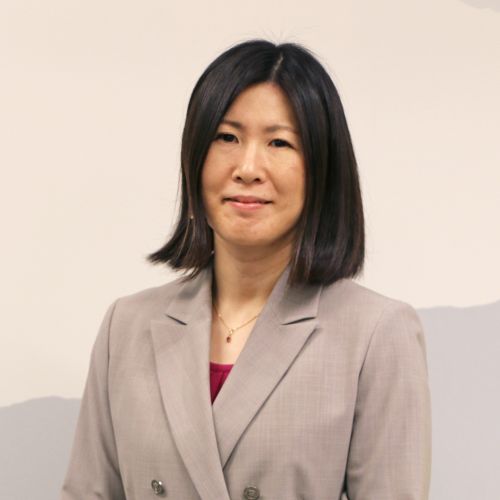
Ikumi Emori
Executive Officer, Edge International, Inc.
Head of ESG Advisory Division
Senior Researcher, EDGE Research Institute
She began her career at a disclosure support company, where she helped clients produce CSR reports. As ESG gained ground in Japan after the 2008 financial crisis, she has worked in the field for nearly 18 years. At Edge International, she supports companies on the front lines of integrated reporting.
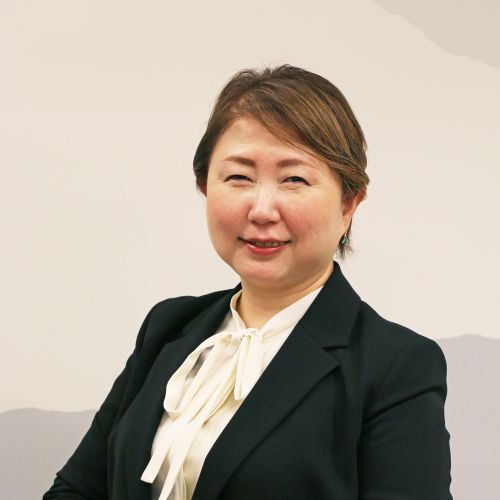
Yuka Amano
Codo Advisory
Director
She holds a master’s degree in management from the graduate school of Osaka City University (now Osaka Metropolitan University), where she wrote her thesis on social entrepreneurship. After serving in several management roles, including on a manufacturing company’s leadership team, as president of a listed company’s subsidiary, and as CMO of a university spin-off, she spent four years in the PE/VC investment division of MCP, working on due diligence, portfolio monitoring and LP relations. In parallel, she led impact investing across MCP Group’s PE/VC funds, building a fund-level framework covering the theory of change, impact criteria in investment decisions, due diligence, investment committee review and post-investment impact assessment. At Codo Advisory, she advises on impact investing and impact measurement and management (IMM).
