Author name: Codo Team

Codo's Insights, Renewable Energy

Grid or Greenfield? Understanding how to Design your Transition Roadmap in Japan’s Developing Energy Mix: Energy of the Near Future Part 2

This article will examine the current status, emerging technologies, investment and sustainability tradeoffs, and likelihood of target capacity achievement for both nuclear and solar to ask the question: In setting a transition roadmap, should corporations rely on Japan’s grid decarbonization or invest in their own greenfield projects?

Codo's Insights, Renewable Energy

Japan’s Ambitious Energy Strategy: Energy of the Near Future Part 1

Energy demands are increasing at unprecedented rates, geo-political conflicts are enhancing the need for energy security, climate tipping points are being passed faster than expected, and economic shifts coupled with Japanese domestic political upheaval are driving development interests focused on critical infrastructure. For corporations in Japan planning their transitions to low-carbon business models, the availability of clean, reliable energy is critical. To achieve Japan’s energy goals, two main pathways have emerged: the return of nuclear power, and the rise of mega-solar. In the recent elections, the debate around each pathway raged among the public as politics shifted. In this multi-piece insights article series we will examine the science behind each strategy’s rhetoric. We will discuss the benefits, the costs, and the way each option fits into the broader landscape. This first article will cover an overview of the changing energy situation and the public sentiment towards nuclear and mega-solar as solutions. Our following article will deep dive into each technology and analyze which may be most appropriate.

Codo's Insights, ESG Regulations, ESG Reporting

Assessing the Components of a “Good” CSRD Report

As Japanese companies begin preparing CSRD-aligned reports we are frequently asked how companies can ensure their reports can be viewed as credible compared to industry peers. To answer these questions, we have assessed published reports to prepare a case study for 5 CSRD reports from various industries to give concrete examples of what “good” and “poor” reports include.

Codo's Insights

Resilience: Sustaining Corporate Momentum through Turbulent Times, lessons for the world from the United States’ experience

Political, economic, and environmental turbulence creates an increasingly uncertain landscape for corporations making long term investment planning difficult. It is tempting to simply withdraw from significant investment decisions until there is more certainty, but such corporate paralysis can be lethal in an inevitably shifting landscape. The US is more volatile than any other major market now, particularly with regards to corporate sustainability. US corporations are responding by pursuing resilience: the ability to withstand risk without contributing. This article describes four key learnings that Japan and other markets can take from the US experience before they, too, are subject to impacts from environmental turbulence.

Codo's Insights, ESG Regulations, ESG Reporting

In Turbulent Times, Slow and Steady Wins the Race: ISSB, SSBJ, CSRD, and US ESG Regulations

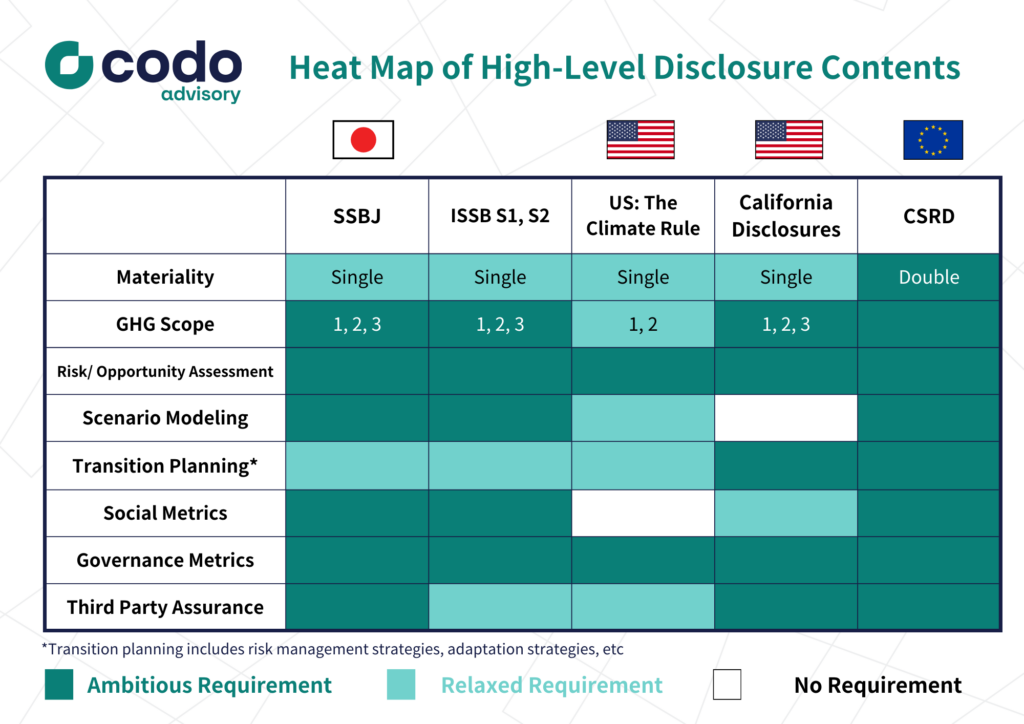
As promised, Japan has published their ISSB-aligned ESG reporting standards, the SSBJ standards. As a substitute for TCFD reporting, Prime listed companies will be required to issue SSBJ reports starting from 2028 for the highest market cap tier. Nothing about the standards is shocking or extremely challenging, as one can expect from Japanese regulations. Just four months ago the lack of ambition in this standard’s release would have been a cause for disappointment, but in this era of shifting political and regulatory tides, the steady consistency of Japan’s regulations provide a beacon of hope that in calmer waters, progress towards a sustainable future prevails.

Codo's Insights, Human Rights

How Essential are Just Transition and Social Equity to a Sustainable Future?

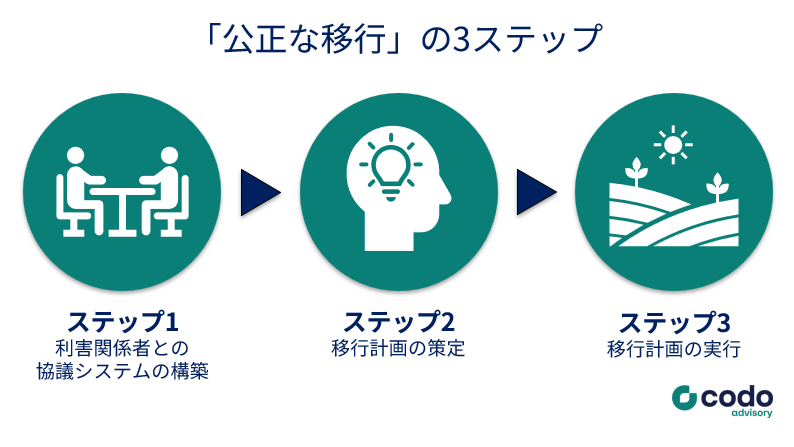
As the transition to a decarbonized society gains momentum, it is essential not to overlook the less visible impacts that may arise in its wake. Without a deliberate focus, decarbonization efforts risk deepening social inequalities and enabling human rights violations. For companies, incorporating the principles of just transition and social equity is not only a matter of responsibility but also a strategic opportunity to enhance long-term resilience. In this article, we outline the core concepts behind just transition and social equity, examine real-world cases of human rights challenges and propose practical steps companies can take to navigate the path toward a fair and sustainable future.