ESG Reporting

Codo's Insights, ESG Regulations, ESG Reporting

Uneven Ground: The State of ESG Disclosure in 2026

Three years after the ISSB set out to create a universal language for sustainability disclosure, the world is speaking it, albeit unevenly. Some are moving forward, others are retreating, and one major economy is walking away from the table altogether. A mid-2026 assessment of where ESG reporting stands, and an update to our April 2025 Insights “ In Turbulent Times, Slow and Steady Wins the Race: ISSB, SSBJ, CSRD, and US ESG Regulations”

Codo's Insights, ESG Regulations, ESG Reporting

Assessing the Components of a “Good” CSRD Report

As Japanese companies begin preparing CSRD-aligned reports we are frequently asked how companies can ensure their reports can be viewed as credible compared to industry peers. To answer these questions, we have assessed published reports to prepare a case study for 5 CSRD reports from various industries to give concrete examples of what “good” and “poor” reports include.

Codo's Insights, ESG Regulations, ESG Reporting

In Turbulent Times, Slow and Steady Wins the Race: ISSB, SSBJ, CSRD, and US ESG Regulations

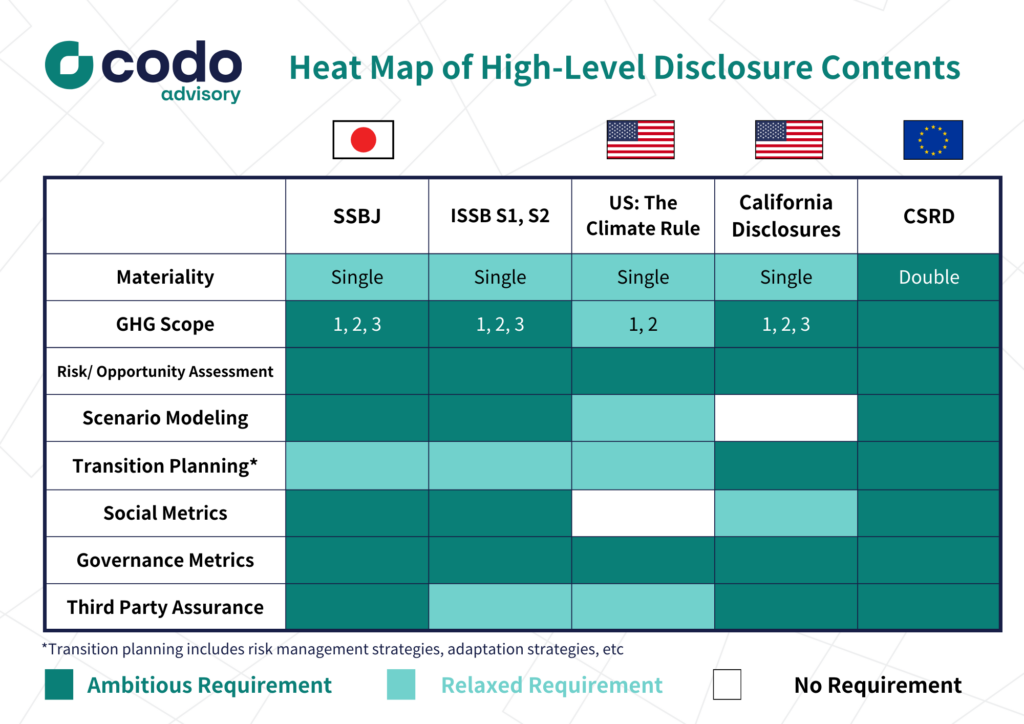
As promised, Japan has published their ISSB-aligned ESG reporting standards, the SSBJ standards. As a substitute for TCFD reporting, Prime listed companies will be required to issue SSBJ reports starting from 2028 for the highest market cap tier. Nothing about the standards is shocking or extremely challenging, as one can expect from Japanese regulations. Just four months ago the lack of ambition in this standard’s release would have been a cause for disappointment, but in this era of shifting political and regulatory tides, the steady consistency of Japan’s regulations provide a beacon of hope that in calmer waters, progress towards a sustainable future prevails.

Codo's Insights, ESG Regulations, ESG Reporting

CSRD Compliance in Practice: Insights from Corporate Preparations

The Corporate Sustainability Reporting Directive (CSRD), which mandates sustainability reporting for companies, requires applicable organizations to begin collecting data in 2024, with the first official disclosures expected in early 2025. The CSRD revises the existing Non-Financial Reporting Directive (NFRD 2014) and expands on the concept of double materiality by requiring companies to disclose both how sustainability factors financially affect the company (“financial materiality”) and how the company’s activities impact the environment and society (“impact materiality”). Under the CSRD, companies must report under the European Sustainability Reporting Standards (ESRS)—encompassing 12 items (ESRS 1–2, ESRS E1–5, ESRS S1–4, ESRS G1)—and the scope will extend to companies outside of Europe over time. As companies look ahead to the first disclosure requirements in early 2025, many in Europe are already making significant preparations. This article will explain the current efforts by these companies and highlight the key characteristics of the CSRD.

Codo's Insights, ESG Reporting, Human Rights

TISFD: Focusing on the “S” in ESG

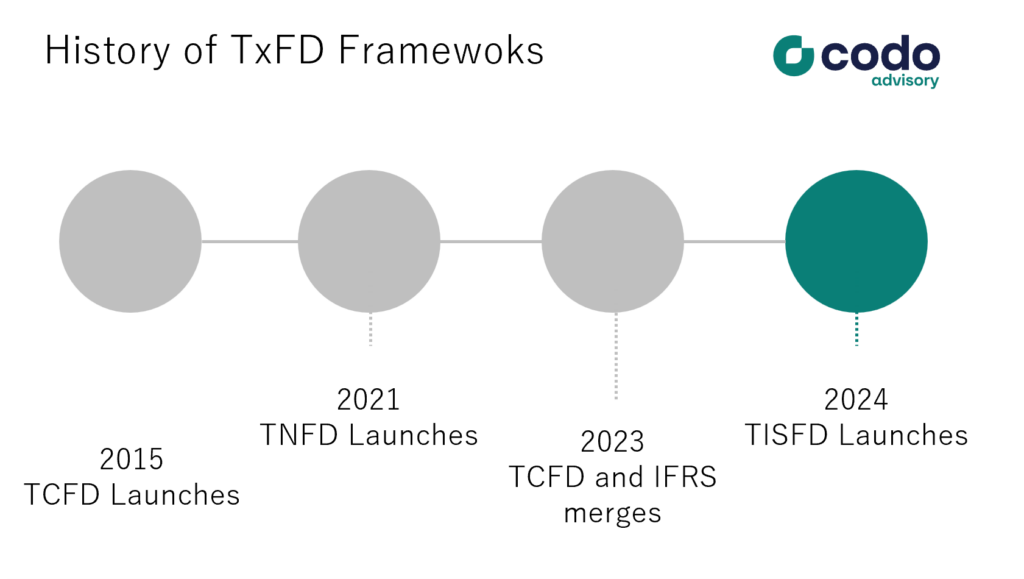
In September 2024, the Task Force on Inequality and Social-related Financial Disclosures (TISFD) was launched, along with the release of a white paper titled “People in Scope.” Although a definitive framework has not yet been established, leaving TISFD’s impact on businesses somewhat uncertain, this article delves into the background of TISFD, compares it with related areas like human rights and human capital, and offers insights on potential developments and implications for Japanese companies.

Codo's Insights, ESG Reporting

Demystifying Double Materiality: What is it and why does it matter?

In the world of corporate finance and sustainability reporting, the concept of “double materiality” has gained increasing prominence in recent years. While the term may sound complex, its core principles are surprisingly straightforward. In this article, we will delve into the concept of double materiality, cutting through the jargon to reveal its significance and implications for your company.

Codo's Insights, ESG Reporting

Reporting Right: How to Choose a Sustainability Reporting Framework for your Organization  

Reporting frameworks are established frameworks or guidelines that provide a structured and standardized approach for organizations and businesses to measure, disclose, and report their environmental, social, and governance (ESG) performance. In this blog post, we at Codo summarize the main environmental and sustainability reporting framework to help you choose the one most relevant for your organization.