

Renewable Energy

Codo's Insights, ESG Regulations, Renewable Energy

France’s and EU’s Fast-Fashion Crackdown and What It Means Beyond the EU

For years, ultra-fast fashion operated in a regulatory blind spot, churning out thousands of cheap new styles a week, without regard to quality or where they would end up. France pushed back in 2024 through a law proposal to stop this trend. Two years on, it is now law, and reshaping how companies operate through a much bigger, EU-wide response. In this Codo Insights, we look at France’s new ultra-fast-fashion law, how the EU is moving towards more sustainable fashion, and how Japan is responding to the same pressures.

Codo's Insights, Renewable Energy

Starting at One Percent: How Japan Rewrote the Numbers on SAF

On July 23, 2026, Japan rewrote the premise of its sustainable aviation fuel (SAF) policy. Fuel suppliers will face a SAF supply obligation from FY2030, but the starting point is one percent of jet fuel supply volume. The level previously designed into the framework worked out, in volume terms, to ten percent. Is this a retreat, or a design corrected to fit reality? Using the final investment decision deadline now closing in at the end of 2026 as our anchor, we map where Japan’s biofuel policy actually stands.

Codo's Insights, Renewable Energy

Grid or Greenfield? Understanding how to Design your Transition Roadmap in Japan’s Developing Energy Mix: Energy of the Near Future Part 2

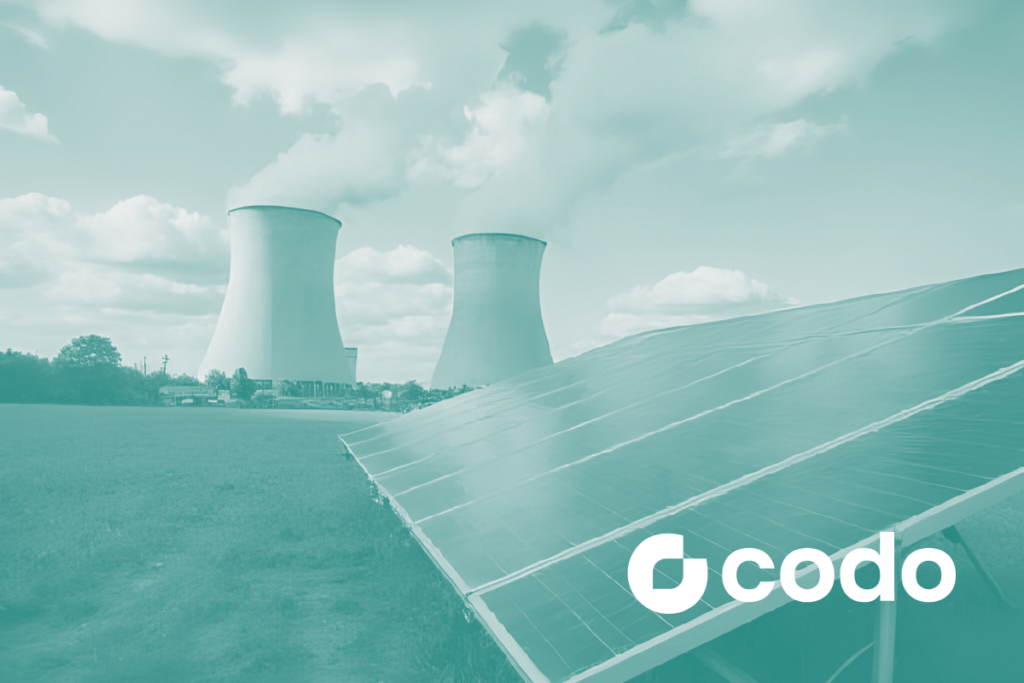
This article will examine the current status, emerging technologies, investment and sustainability tradeoffs, and likelihood of target capacity achievement for both nuclear and solar to ask the question: In setting a transition roadmap, should corporations rely on Japan’s grid decarbonization or invest in their own greenfield projects?

Codo's Insights, Renewable Energy

Japan’s Ambitious Energy Strategy: Energy of the Near Future Part 1

Energy demands are increasing at unprecedented rates, geo-political conflicts are enhancing the need for energy security, climate tipping points are being passed faster than expected, and economic shifts coupled with Japanese domestic political upheaval are driving development interests focused on critical infrastructure. For corporations in Japan planning their transitions to low-carbon business models, the availability of clean, reliable energy is critical. To achieve Japan’s energy goals, two main pathways have emerged: the return of nuclear power, and the rise of mega-solar. In the recent elections, the debate around each pathway raged among the public as politics shifted. In this multi-piece insights article series we will examine the science behind each strategy’s rhetoric. We will discuss the benefits, the costs, and the way each option fits into the broader landscape. This first article will cover an overview of the changing energy situation and the public sentiment towards nuclear and mega-solar as solutions. Our following article will deep dive into each technology and analyze which may be most appropriate.

Codo's Insights, Renewable Energy

Is Carbon Capture, Utilization, and Storage (CCUS) Worth Pursuing?

Carbon Capture, Utilization, and Storage (CCUS) encompasses a range of technologies for capturing carbon dioxide (CO₂) emissions at their source—power plants, industrial facilities, and other major emitters—and either reusing the CO₂ or storing it so it does not enter the atmosphere. Although various forms of CO₂ capture have existed for decades, CCUS has gained renewed prominence as governments and industries strive to meet the increasingly stringent climate goals set under the Paris Agreement. This article begins by explaining CCUS, why it matters, and how it works in practice. It then explores several global case studies to illustrate CCUS’s real-world evolution and challenges. It concludes by examining Japan’s emerging CCUS strategy, weighing both the advantages and drawbacks of deploying CCUS at scale.

Codo's Insights, Renewable Energy

A review of METI’s GX Energy Plan

Japan is facing a dilemma. Fifteen years ago, when Japan was the world’s greatest proponent of safe nuclear energy, Japan led the world with increasingly ambitious emission reduction targets long before the Paris Climate Accords pushed countries to achieve net zero carbon emissions by 2050. Scarcely more than a year following that commitment, however, expansion of nuclear power, and with it Japan’s most viable carbon neutral energy source, was taken off the table. After years of various investments and fears of grid instability, Japan’s renewable mix is still flagging behind other developed nations.