

Ulysses Aoki | Senior Managing Director, Codo Advisory
Share this post
In September 2024, the Task Force on Inequality and Social-related Financial Disclosures (TISFD) was launched, along with the release of a white paper titled “People in Scope.” Although a definitive framework has not yet been established, leaving TISFD’s impact on businesses somewhat uncertain, this article delves into the background of TISFD, compares it with related areas like human rights and human capital, and offers insights on potential developments and implications for Japanese companies.
TCFD, TNFD, and TISFD
The lack of actionable outcomes to address global issues like climate change has been termed the “Paris Agreement failure.” In 2015, in response to this, the Task Force on Climate-related Financial Disclosures (TCFD) was launched. Initially intended primarily as a framework for financial institutions, it has since become a widely adopted standard across climate-related international regulations.
Climate change, being a top priority social issue requiring global cooperation, necessitated TCFD’s creation. However, biodiversity—a closely related topic—was left unaddressed. Research showing that half of the world’s GDP depends on natural capital highlighted biodiversity as another pressing global issue requiring cross-border cooperation, leading to the establishment of the Task Force on Nature-related Financial Disclosures (TNFD) in 2021.
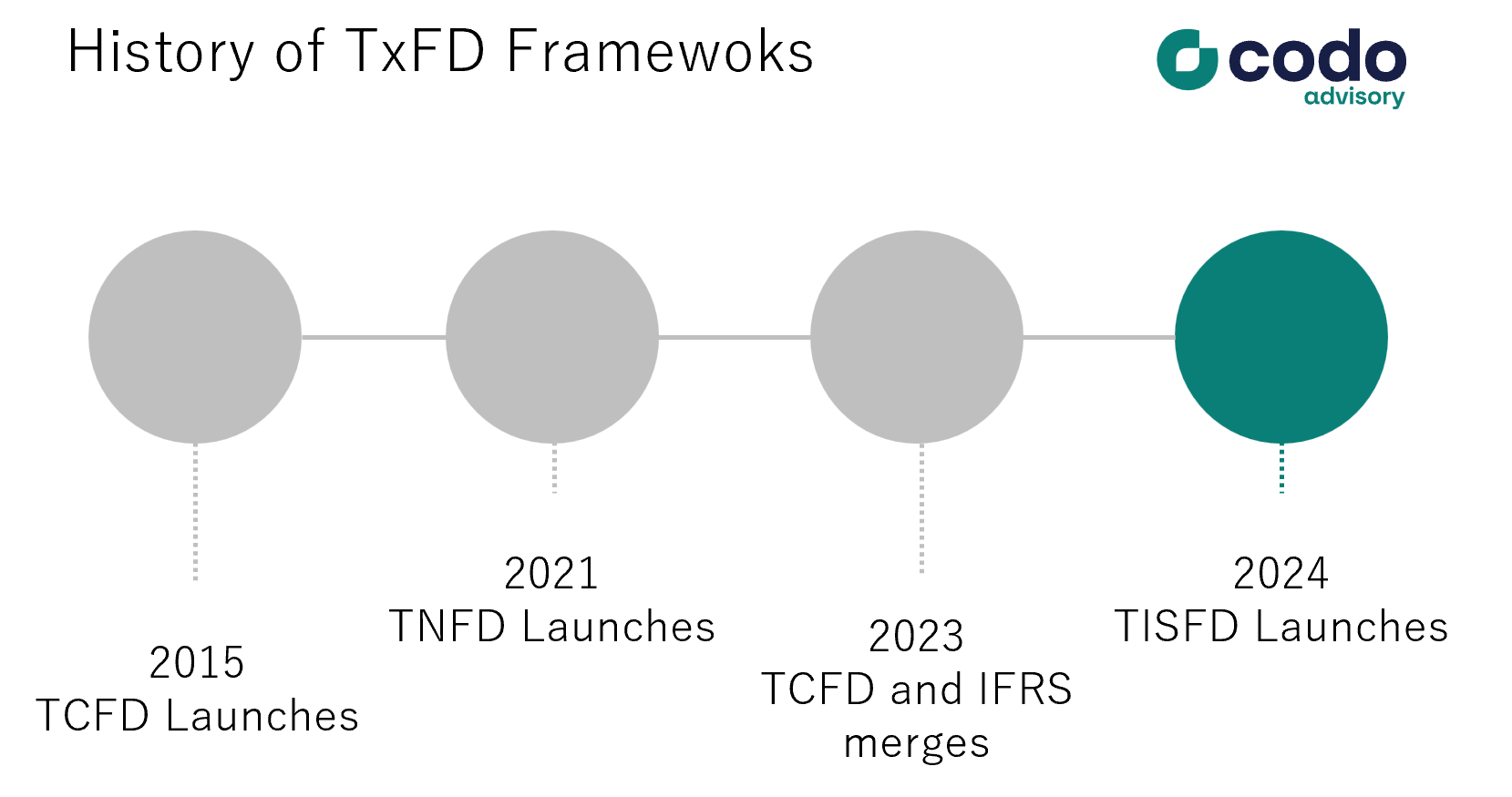
Subsequently, in September 2024, TISFD was established. However, the groundwork was actually laid in 2021 amid growing awareness of social issues exacerbated by the pandemic, including accelerating income inequality. Discussions began on forming a task force focused on inequality.
Although inequality is a core issue, several other social concerns emerged in tandem with the Covid-19 pandemic, such as:
・Mass layoffs by corporations
・Wage issues and rising living costs
・Complexity and stagnation in supply chains
・Neglect of upstream human rights issues in supply chains
・Declining trust in government
・Polarization due to political and social ideologies
While these are closely related to inequality, the scope of intertwined issues is vast. Considering these social challenges, stakeholders, especially investors, demanded a framework consistent with human rights and human capital, leading to TISFD’s formation in 2024 to address a broad array of social-related issues.
An overview of TISFD
As outlined above, TISFD is still in its nascent stage, and a precise framework has yet to be defined. However, its initial report, “People in Scope,” published in late September, provides a general approach and perspective. Here’s a summary of key anticipated outcomes:
①Global Disclosure Standards
Proposed global disclosure standards on inequality and social issues to guide businesses and financial institutions in understanding the impacts, risks, and opportunities, structured into four pillars, similar to TCFD.
②Guidance and Recommendations
Practical guidance on implementing the disclosure standards ①, including recommended Key Performance Indicators (KPIs) critical in the disclosure realm.
③Educational and Capacity-Building Resources
Resources to support a broad audience, including NGOs, civil society, and government entities, beyond just businesses and financial institutions.
④Foundational Concepts
An outline of the positive and negative impacts of business activities on “people,” showing alignment and relevance to established concepts such as human rights and human capital.
⑤Evidence of Impacts
Research demonstrating the impact of inequality and social issues on businesses and financial institutions, including how business activities might exacerbate these issues, as well as economic impacts.
Points ① and ② provide the framework and guidance companies are seeking. Although frameworks like GRI and ESRS (set to be mandatory in the EU) already exist for human rights and human capital-related disclosures, they leave room for interpretation. TISFD is expected to make this area more rigid and standardized.
Points ④ and ⑤ are also noteworthy. TISFD aims to clarify distinctions among concepts like human rights, human capital, inequality, and well-being and relate these to economic impacts.
Previously, frameworks like the GHG Protocol and carbon pricing established a clear economic value per ton, prompting gradual corporate and governmental action on emissions reduction. However, the “S” in ESG—centered on human rights—has struggled with economic quantification, often limiting companies to risk-reduction measures. Merely establishing a framework to address this could accelerate corporate action.
Human Rights and Human Capital Relationship
Rather than creating a task force solely for inequality, TISFD was established to integrate human capital and human rights. Initially, IFRS’s Sustainability Disclosure Standards were structured with S1 covering overall sustainability-related information and S2 addressing climate-related disclosures. There was speculation that S3 would focus on human rights. However, investors called for a comprehensive framework addressing issues like well-being alongside human rights, leading IFRS to expand S3 to include biodiversity and human capital.
Traditionally, human rights were governed by broad principles, while in Japan, human capital management was largely guided by the Ito Report. However, the Ito Report is a unique domestic approach that scarcely mentions human rights, creating a “Galapagos effect” where Japan’s view on human capital diverges from global perspectives. Fortunately, S3 and TISFD seem to be working toward harmonizing these areas.
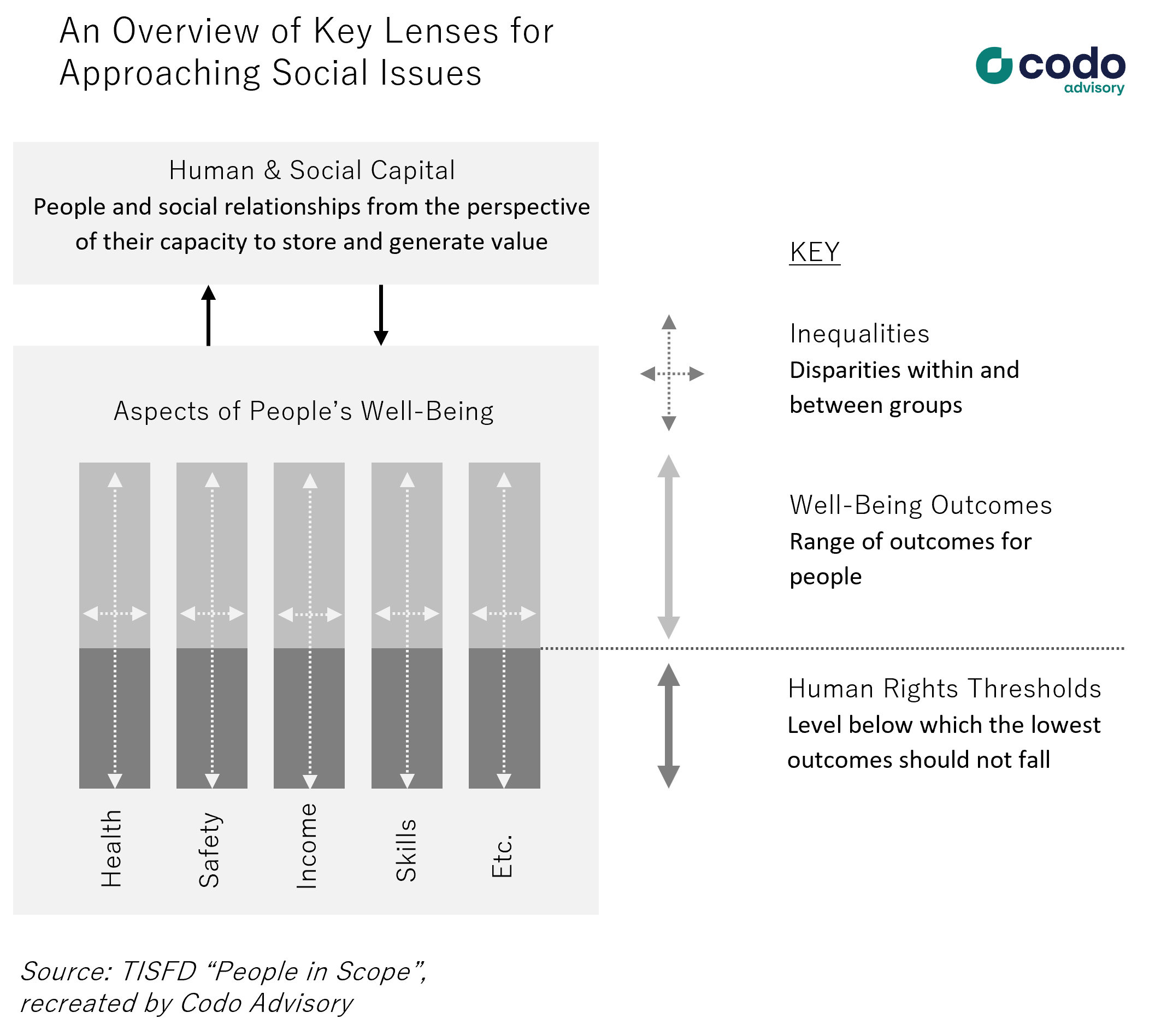
According to TISFD’s concept, “human rights” ensure minimum well-being for all individuals, while “well-being” reflects the breadth of wellness in daily life. “Inequality” represents disparities in well-being and human rights within or between groups (e.g., racial groups). Additionally, TISFD highlights the relationship between these elements and human and social capital.
When human rights and well-being are prioritized, human and social capital are strengthened, and vice versa. The challenge for TISFD is to align its recommended disclosure framework with this holistic perspective.
Future Developments and Impacts on Japanese Companies
With TCFD’s integration into the International Sustainability Standards Board (ISSB) in 2023, TISFD’s framework could essentially become politically aligned with IFRS’s ISSB, and S3 may incorporate the same content and approach.
For Japan, the Japanese ISSB, named Sustainability Standards Board of Japan (SSBJ), has already released drafts for Japan’s S1 and S2 standards, with finalized versions expected by March 2025. Japanese companies will likely apply S1 and S2 to fiscal year 2025 and include sustainability reports by late 2026.
S3 implementation may not occur for about three more years, so regulatory activity from Japanese companies can be expected around then. Meanwhile, human capital disclosures have been mandatory in Japan since 2023, with Japanese companies showing unique progress in this area through the Ito Report.
Going forward, Japanese companies will need to consider:
・Synergies between human rights and other areas in the “S” category
・The gap between domestic human capital disclosure trends and the global standards TISFD aims to establish
・Domestic requirements addressed by TISFD that have not been widely discussed
I believe responses to these issues require either government-led regulations and guidance or the need for businesses and civil society to present their own independent perspectives.
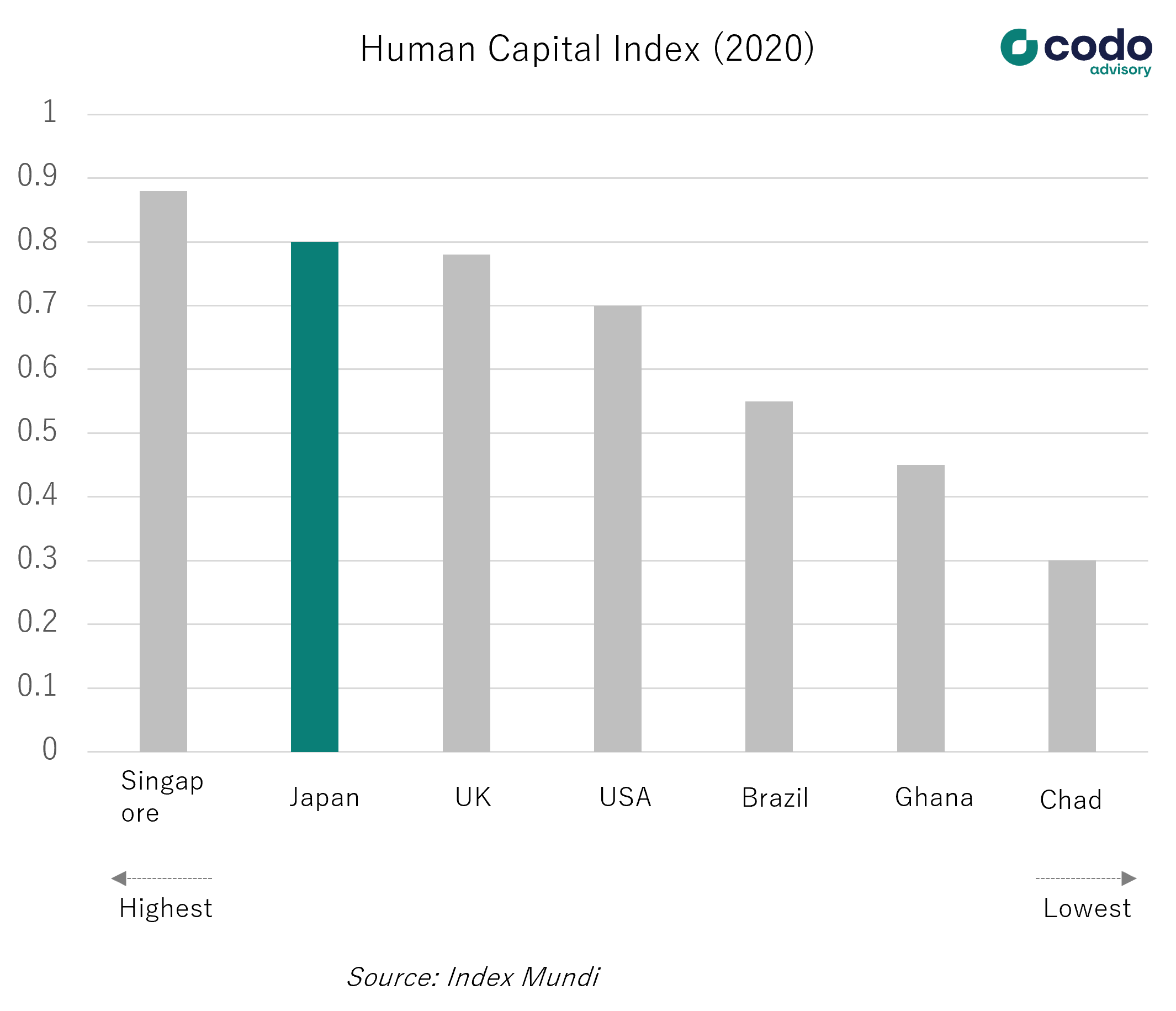
As Japan ranks highly (3rd globally) in the Human Capital Index, the country is considered to have a well-developed human capital framework. However, within business contexts, there are both strengths (lifetime employment, talent development) and areas needing progress (mental health, diversity, wage issues).
Unlike the topics addressed by TCFD and TNFD, it can be said that there is still significant room for Japanese companies to contribute to the issues covered by TISFD, while there is also much for them to learn.
How did you find this article? As an individual passionate about the “S” in ESG and fortunate enough to have been involved in projects related to human rights, supply chains, social/human capital since 2015, I am eagerly anticipating the development of TISFD. Precisely because social issues are complex and can at times be subjective, I feel the emergence of such a framework is crucial.
If you are interested in transforming society for the better together with us at Codo Advisory, please feel free to reach out. We welcome not only project inquiries but also any feedback, collaboration opportunities, and job/recruitment related discussions.
More about this topic
- People in Scope – TISFD
- Investors Urge ISSB to Develop Reporting Standard for Human Rights and Human Capital – ESG Today
- Human Capital Index – Index Mundi
Are you looking for support in your sustainability journey?
Get in touch!
