
Codo’s Insights

Codo’s Insights are a series of articles written by our team on topics we identify as strategic for our clients and partners. We cover developments across the Environmental, Social, and Governance (ESG) dimensions of corporate sustainability, with the aim of bringing strategic insights from around the world to companies operating in Japan.

Codo's Insights

Chief Sustainability Officer: Does Your Company Need One?

A company’s board of directors and executive team typically includes indispensable “chiefs”: CEOs (chief executive officers), COOs (chief operating officers), CFOs (chief financial officers)… But in recent years, a new kind of CxO has emerged in boardrooms around the world: the CSO, or Chief Sustainability Officer. What is their mission? Are they essential to a company’s sustainability success? This article explores the evolving role of CSOs, their growing strategic importance, and whether companies should consider appointing one.
Codo's Insights, ESG Regulations, ESG Reporting

In Turbulent Times, Slow and Steady Wins the Race: ISSB, SSBJ, CSRD, and US ESG Regulations

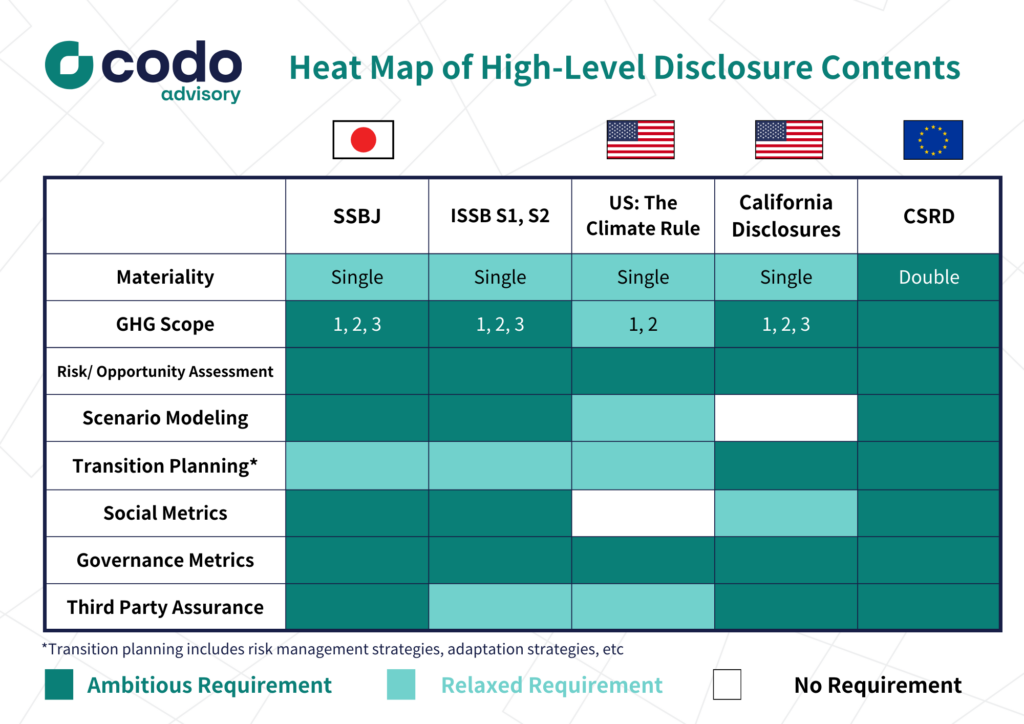
As promised, Japan has published their ISSB-aligned ESG reporting standards, the SSBJ standards. As a substitute for TCFD reporting, Prime listed companies will be required to issue SSBJ reports starting from 2028 for the highest market cap tier. Nothing about the standards is shocking or extremely challenging, as one can expect from Japanese regulations. Just four months ago the lack of ambition in this standard’s release would have been a cause for disappointment, but in this era of shifting political and regulatory tides, the steady consistency of Japan’s regulations provide a beacon of hope that in calmer waters, progress towards a sustainable future prevails.

Codo's Insights, Human Rights

How Essential are Just Transition and Social Equity to a Sustainable Future?

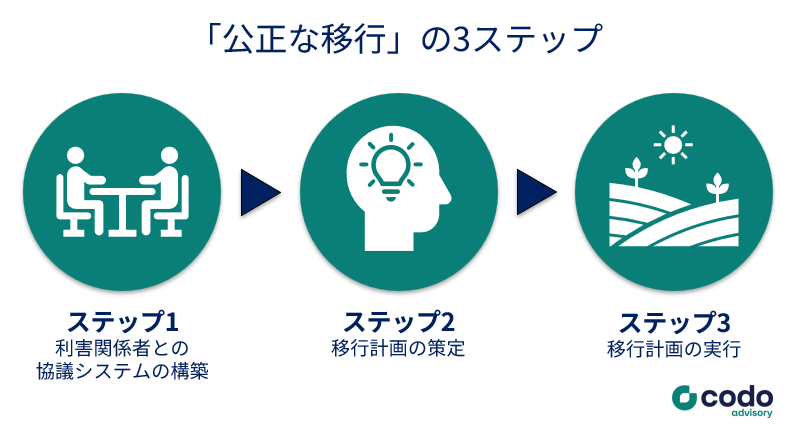
As the transition to a decarbonized society gains momentum, it is essential not to overlook the less visible impacts that may arise in its wake. Without a deliberate focus, decarbonization efforts risk deepening social inequalities and enabling human rights violations. For companies, incorporating the principles of just transition and social equity is not only a matter of responsibility but also a strategic opportunity to enhance long-term resilience. In this article, we outline the core concepts behind just transition and social equity, examine real-world cases of human rights challenges and propose practical steps companies can take to navigate the path toward a fair and sustainable future.

Climate Change, Codo's Insights

The Environmental Impact of AI: Positive or Negative?

In 2023, 30.5 billion digital devices were used by 5.35 billion people — an average of around six devices per person. Digital technologies are now an inseparable part of our daily lives, shaping how we work, communicate, and interact with the world. Among these technologies, artificial intelligence (AI) is rapidly gaining ground, transforming industries and redefining possibilities. But as AI’s influence grows, so does its environmental footprint — raising an essential question: is AI’s overall impact on the planet positive or negative?

Codo's Insights, Renewable Energy

Is Carbon Capture, Utilization, and Storage (CCUS) Worth Pursuing?

Carbon Capture, Utilization, and Storage (CCUS) encompasses a range of technologies for capturing carbon dioxide (CO₂) emissions at their source—power plants, industrial facilities, and other major emitters—and either reusing the CO₂ or storing it so it does not enter the atmosphere. Although various forms of CO₂ capture have existed for decades, CCUS has gained renewed prominence as governments and industries strive to meet the increasingly stringent climate goals set under the Paris Agreement. This article begins by explaining CCUS, why it matters, and how it works in practice. It then explores several global case studies to illustrate CCUS’s real-world evolution and challenges. It concludes by examining Japan’s emerging CCUS strategy, weighing both the advantages and drawbacks of deploying CCUS at scale.

Biodiversity, Codo's Insights, Interview

Interview | Takao Hayashi, Rice Paddy Sommelier

Japan’s rice paddies are home to a diverse range of living creatures. One person dedicated to sharing the beauty of this ecosystem and protecting it is “Rice Paddy Sommelier” Takao Hayashi. Originally working as a designer, he became interested in biodiversity in rice paddies after learning about the endangered status of the medaka (Japanese rice fish). This led him to fully commit to environmental conservation efforts. For over 20 years, he has been bridging agriculture and nature conservation, developing unique initiatives such as the “Biodiversity Improvement Points Certification.” In this interview, we spoke with Mr. Hayashi about his journey as a “Rice Paddy Sommelier”, his passion for biodiversity, and his vision for the future.

Codo's Insights, ESG Regulations, ESG Reporting

CSRD Compliance in Practice: Insights from Corporate Preparations

The Corporate Sustainability Reporting Directive (CSRD), which mandates sustainability reporting for companies, requires applicable organizations to begin collecting data in 2024, with the first official disclosures expected in early 2025. The CSRD revises the existing Non-Financial Reporting Directive (NFRD 2014) and expands on the concept of double materiality by requiring companies to disclose both how sustainability factors financially affect the company (“financial materiality”) and how the company’s activities impact the environment and society (“impact materiality”). Under the CSRD, companies must report under the European Sustainability Reporting Standards (ESRS)—encompassing 12 items (ESRS 1–2, ESRS E1–5, ESRS S1–4, ESRS G1)—and the scope will extend to companies outside of Europe over time. As companies look ahead to the first disclosure requirements in early 2025, many in Europe are already making significant preparations. This article will explain the current efforts by these companies and highlight the key characteristics of the CSRD.

Codo's Insights, Interview

Interview | Ulysses Aoki, Senior Managing Director

Ulysses Aoki is a seasoned leader with over a decade of experience in the field of sustainability. Starting his career in consulting, he has led projects for major domestic and international corporations while also contributing his expertise to unicorn companies and impact investment funds. Leveraging his extensive knowledge and diverse perspectives, he has recently joined Codo Advisory, taking on new challenges ahead. In this interview, we delve into what inspired him to pursue a career in sustainability, the highlights of his professional journey so far, and his vision for the future at Codo.

Codo's Insights, ESG Reporting, Human Rights

TISFD: Focusing on the “S” in ESG

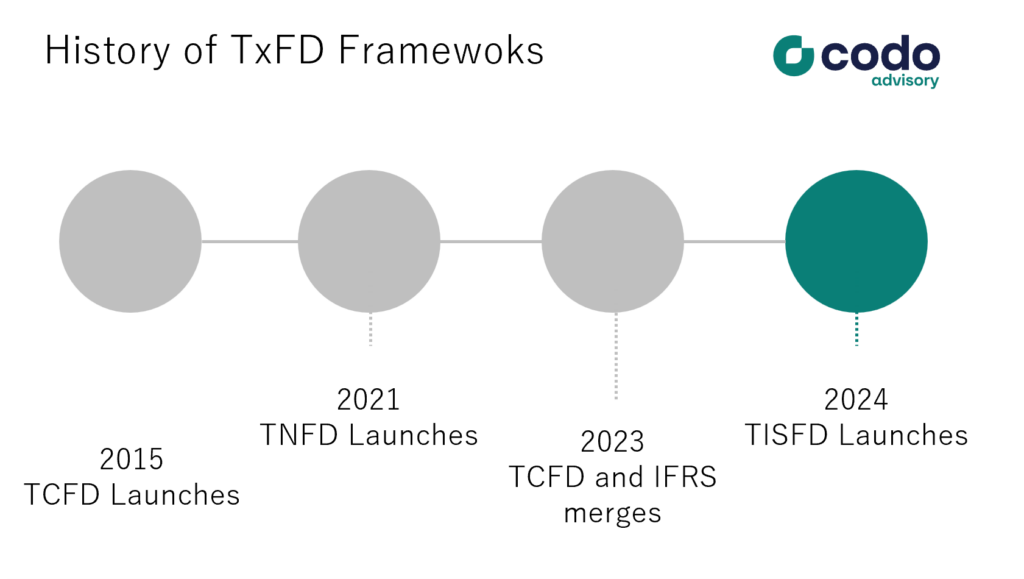
In September 2024, the Task Force on Inequality and Social-related Financial Disclosures (TISFD) was launched, along with the release of a white paper titled “People in Scope.” Although a definitive framework has not yet been established, leaving TISFD’s impact on businesses somewhat uncertain, this article delves into the background of TISFD, compares it with related areas like human rights and human capital, and offers insights on potential developments and implications for Japanese companies.